
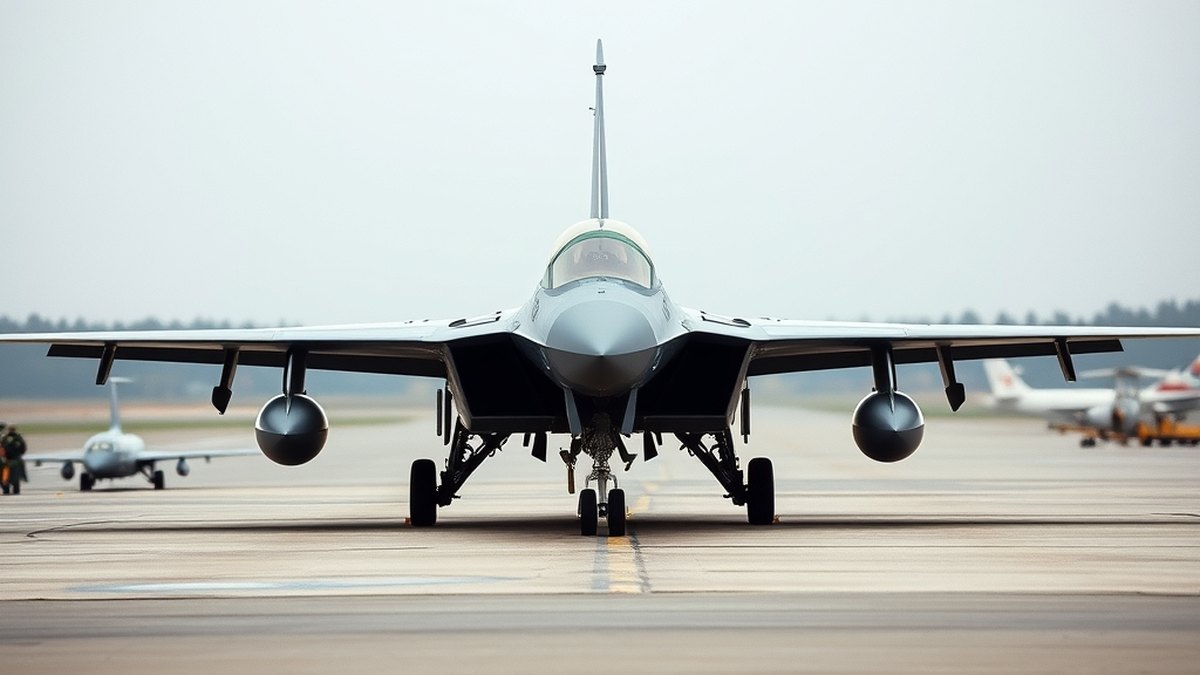
Sweden is supporting NATO air operations in Poland with a forward support team of eight personnel at Mińsk Mazowiecki, and Swedish Gripens joined Polish F-16s in a Nov. 20 response, The War Zone reports.
Sweden is supporting NATO air operations from Mińsk Mazowiecki airbase near Warsaw with a forward team of just eight personnel, and Swedish Gripen fighters joined Polish F-16s in a response on Nov. 20, according to The War Zone (TWZ).
What we know
- Location Mińsk Mazowiecki airbase, Poland
- Forward team Eight Swedish personnel
- Aircraft Swedish Gripen fighters, based mainly in Sweden
- Incident date Nov. 20
- Source The War Zone, citing Maj. Gen. Jonas Wikman
The Gripens remain primarily based in Sweden. The small team gives them an additional location for landing, refueling, limited maintenance and, in a crisis, rearming, TWZ reports. The footprint is far smaller than at an earlier deployment to Malbork, which involved more than 100 personnel, according to TWZ.
Swedish Air Force chief Maj. Gen. Jonas Wikman told TWZ a Gripen in the air-to-air role can be refueled and rearmed in under 15 minutes by one officer and five conscripts. Sweden is also developing hot rearming, which he expects to take under 10 minutes.
Claims and responses on the Nov. 20 incident
TWZ reports that Russian cruise missiles entered Polish airspace during an attack on Ukraine. One Swedish pilot, with conditional NATO authorization to engage, tried to intercept an object believed to be a Russian Kh-101 missile. Exceptionally difficult weather prevented positive identification, and the pilot held fire, according to the report.
Wikman said the Polish mission lasted several hours and that the forward team was instrumental in sustaining it.
Frequently asked questions
How many Swedish personnel are at Mińsk Mazowiecki?
A forward support team of eight personnel is based there, according to The War Zone. The Gripen fighters themselves remain primarily based in Sweden.
Did a Swedish Gripen fire on a Russian missile over Poland?
No. TWZ reports the pilot had conditional NATO authorization to engage an object believed to be a Kh-101, but exceptionally difficult weather prevented positive identification and the pilot held fire.
Sources: The War Zone.
AI-assisted: drafted with AI from the sources above and reviewed by an editor.