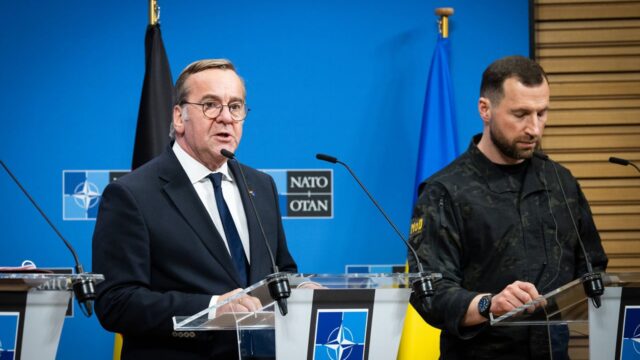
Senior NATO officials at Edge 26 in İzmir said the alliance is using digital tools, including real-time maritime surveillance, to respond to a rise in Russian hybrid attacks on allies.
NATO is using digital tools, including real-time maritime surveillance, to counter a rise in Russian hybrid attacks on allies, senior officials said at NATO Edge 26 in İzmir.
The numbers
- Event NATO Edge 26, İzmir
- Threat Russian hybrid attacks
- Maritime tools Baltic Sentry, Task Force X
- Task Force X origin Undersea damage before Christmas 2024
Jean-Charles Ellermann-Kingombe, NATO's Assistant Secretary General for Cyber and Digital Transformation, said allies had seen a clear increase in hybrid attacks in recent years, particularly since Russia's full-scale invasion of Ukraine. He linked much of it to Russian efforts to discourage support for Ukraine, including cyber attacks on infrastructure and attempts to undermine the cohesion of allied societies.
He cited the maritime domain as an example. After damage to undersea cables in the Baltic, NATO deployed a stronger physical presence through Baltic Sentry, while Allied Command Transformation developed Task Force X to provide real-time situational awareness at sea. Tarja Jaakkola, NATO's Assistant Secretary General for Defence Industry, Innovation and Armaments, said Task Force X began after undersea infrastructure was damaged shortly before Christmas 2024.
Admiral Pierre Vandier, Supreme Allied Commander Transformation, said NATO's multi-domain operations concept means orchestrating military and non-military instruments of power. He said digital technology would help build a shared picture for all 32 nations and give the alliance speed and scale.
Air Chief Marshal Sir Johnny Stringer, Deputy Supreme Allied Commander Europe, said nations could also respond on diplomatic, economic and information fronts.
Frequently asked questions
What is NATO Task Force X?
Allied Command Transformation developed Task Force X to provide real-time situational awareness at sea, after undersea cables were damaged in the Baltic.
How is NATO responding to Russian hybrid attacks?
Officials said NATO is using digital tools such as real-time maritime surveillance and a stronger physical presence through Baltic Sentry.
Sources: UK Defence Journal.
AI-assisted: drafted with AI from the sources above and reviewed by an editor.