
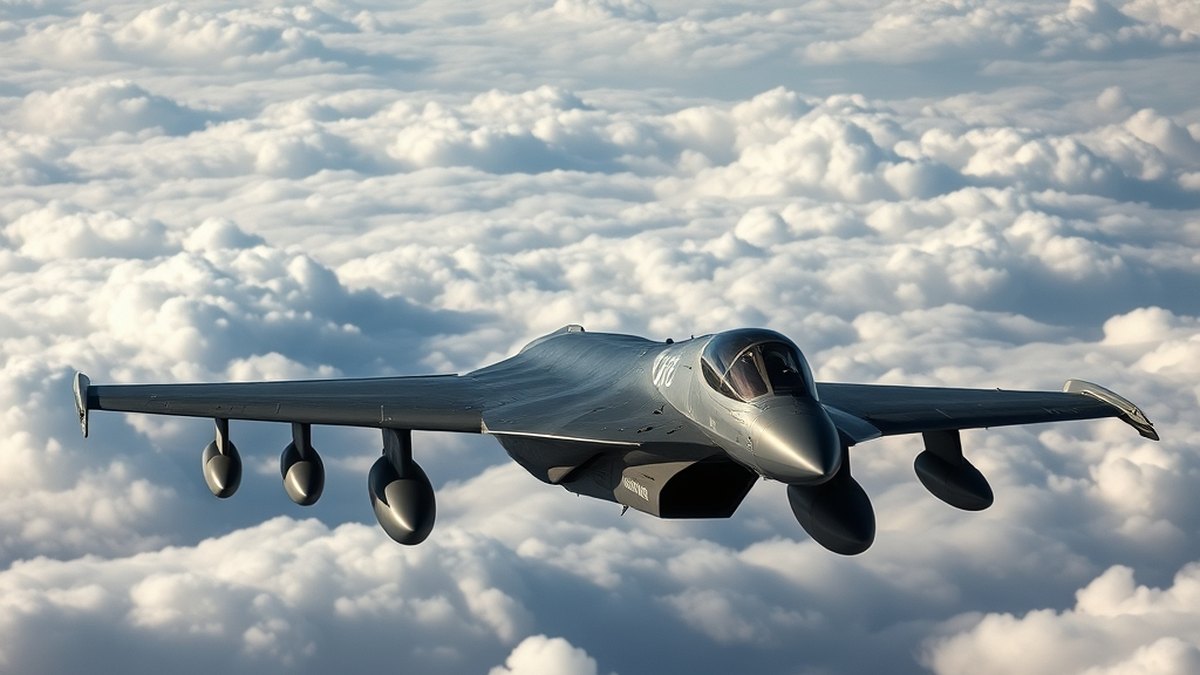
The Royal Navy carrier HMS Prince of Wales launched F-35B fighters to intercept a Russian Tu-95 Bear bomber during NATO's Neptune Strike 26-4 exercise off Norway, part of Operation Firecrest.
The Royal Navy aircraft carrier HMS Prince of Wales scrambled F-35B Lightning II fighters to intercept a Russian Tu-95 Bear bomber during NATO's Neptune Strike 26-4 exercise off Norway, according to Naval Today and Defence Industry Europe.
What we know
- What F-35Bs scrambled to intercept Tu-95 Bear bomber
- Where Off Norway, during Neptune Strike 26-4
- Ship HMS Prince of Wales, Royal Navy
- Exercise scale 17 nations, 20 warships, 40 aircraft
- Deployment Operation Firecrest, phase two
- Return Portsmouth, November 16
The carrier led one of three naval task groups in the exercise, which involved 17 nations, 20 warships and 40 aircraft. The British-led group operated off Norway, while Italian and Turkish groups operated in the Mediterranean. The Norwegian frigate KNM Fridtjof Nansen and the Type 45 destroyer HMS Dauntless escorted the carrier. The Type 23 frigate HMS St Albans, a French frigate and HNoMS Maud also took part.
The air wing included F-35Bs from 617 Squadron and Merlin helicopters from the Commando Helicopter Force and 820 Naval Air Squadron. The F-35Bs also practiced loading and dropping live Paveway IV bombs.
Commodore Richard Hewitt, commander of the UK Carrier Strike Group, said Operation Firecrest had shown the strength of NATO integration and the value of a persistent maritime presence in the North Atlantic and High North.
Ammunition resupply and Operation Firecrest phase two
Before the exercise, the carrier's F-35Bs joined Norwegian Air Force F-35As to escort a US Air Force B-52 bomber. HMS Prince of Wales then took on ammunition at the military jetty at Hammernesodden, near Namsos. The Royal Navy said this was the first time a Queen Elizabeth-class carrier had loaded ammunition at a port outside the UK, and the first time Norway had arranged an ammunition resupply for an ally.
The activity formed part of Operation Firecrest, the UK's six-month deployment to strengthen NATO's defense of its northern flank. Its second phase began in mid-October after routine maintenance in the UK and focused on Arctic and sub-Arctic waters, including the Greenland-Iceland-UK Gap. After the exercise the carrier hosted the Atlantic Future Forum and the International Sea Power Conference in Oslo, then returned to Portsmouth on November 16.
Frequently asked questions
What did HMS Prince of Wales intercept off Norway?
The carrier scrambled its F-35B fighters to intercept a Russian Tu-95 Bear long-range bomber during NATO's Neptune Strike 26-4 exercise.
What was Neptune Strike 26-4?
A NATO exercise involving 17 nations, 20 warships and 40 aircraft. HMS Prince of Wales led one of three naval task groups, the one operating off Norway.
What milestone did HMS Prince of Wales achieve in Norway?
The Royal Navy said it was the first Queen Elizabeth-class carrier to load ammunition at a port outside the UK, and the first time Norway arranged an ammunition resupply for an ally.
Sources: Naval Today, Defence Industry Europe.
AI-assisted: drafted with AI from the sources above and reviewed by an editor.