
Defence Readiness and Industry Minister Luke Pollard confirmed in a written answer that the UK Ministry of Defence is examining land applications for the DragonFire laser weapon. He gave no trial date, vehicle, site or purchase decision.
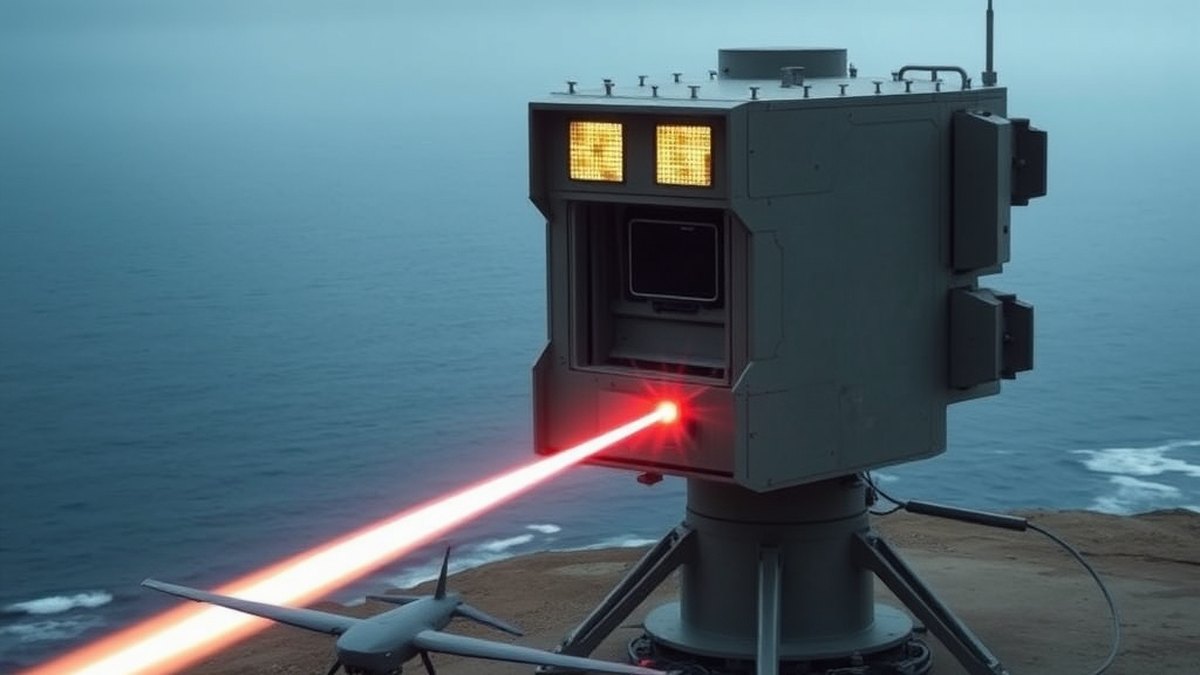
The UK Ministry of Defence is examining land-based uses for its DragonFire laser weapon, Defence Readiness and Industry Minister Luke Pollard confirmed in a November 23, 2026 written answer to Conservative MP Ben Obese-Jecty, according to Army Recognition. Obese-Jecty had asked what assessment the department had made of the feasibility of using the laser ashore.
The numbers
- Confirmed by Minister Luke Pollard, written answer, November 23, 2026
- Status Land applications under examination
- Naval fit First Type 45 installation on track for 2027
- Contract £316 million to MBDA UK, November 2025
- Firing cost About £10 per shot (ministry estimate)
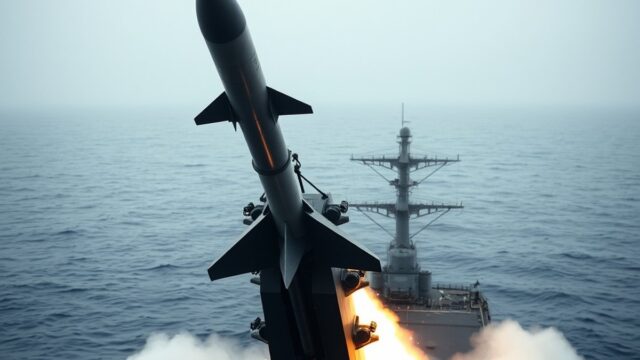
Pollard gave no land trial date, named no vehicle or site, and announced no purchase decision. The Royal Navy is preparing to fit the first operational DragonFire to a Type 45 destroyer.
DragonFire was developed by the Defence Science and Technology Laboratory with MBDA, Leonardo and QinetiQ. It uses a focused beam of light to damage a target without firing a projectile, needs a clear line of sight, and its engagement range is classified. The ministry reported in November 2025 that it had shot down high-speed drones at the Hebrides Range, in trials involving drones capable of up to 650 km/h, and awarded MBDA UK a £316 million contract that month to deliver systems from 2027. DragonFire is set to be the first high-power laser weapon in service with a European nation, with two systems planned for Type 45 destroyers.
DragonFire’s land testing so far
DragonFire has already been fired from land at test ranges. At Porton Down, the prototype was tested against metal sheets and small drones, according to the laboratory’s 2022–23 annual report, following a tracking trial at Aberporth against air and surface targets. In January 2024, the ministry disclosed that DragonFire had fired at aerial targets at high power at its Hebrides Range.
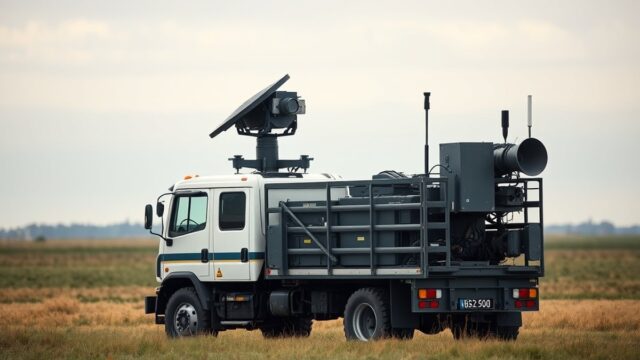
Britain has also tested a vehicle-mounted laser through a separate program. In 2024, soldiers from 16 Royal Artillery used a laser mounted on a Wolfhound armored troop carrier to shoot down hovering targets at Radnor Range in Wales, as the ministry’s Land Laser Directed Energy Weapon demonstrator.
Cost and limits on land
In June 2025, the government announced nearly £1 billion in funding for directed-energy weapons, including DragonFire for the Royal Navy and a planned capability for the British Army.
The ministry estimates DragonFire’s firing cost at about £10 per shot. Army Recognition said the clearest benefit on land would be a lower-cost way to defend military facilities against repeated drone incursions, though a purchase decision would also have to account for the system, its integration and support costs. Because the laser needs a clear line of sight, terrain, buildings and poor visibility could limit where a land-based system can engage drones, making it most relevant as one layer of air defense alongside conventional interceptors.
Frequently asked questions
Is the UK considering a land-based DragonFire laser?
Yes. Minister Luke Pollard confirmed in a November 23, 2026 written answer that the Ministry of Defence is examining land applications, but gave no trial date, platform or purchase decision.
When will the first DragonFire be installed on a Royal Navy ship?
The first installation, on a Type 45 destroyer, is on track for 2027. The ministry awarded MBDA UK a £316 million contract in November 2025 to deliver systems from 2027.
How much does a DragonFire shot cost?
The UK Ministry of Defence estimates about £10 per shot. That covers the shot itself, not the system, integration or support costs.
Sources: Army Recognition, UK Ministry of Defence, Naval News.
AI-assisted: drafted with AI from the sources above and reviewed by an editor.